Wednesday, 9 July 2014

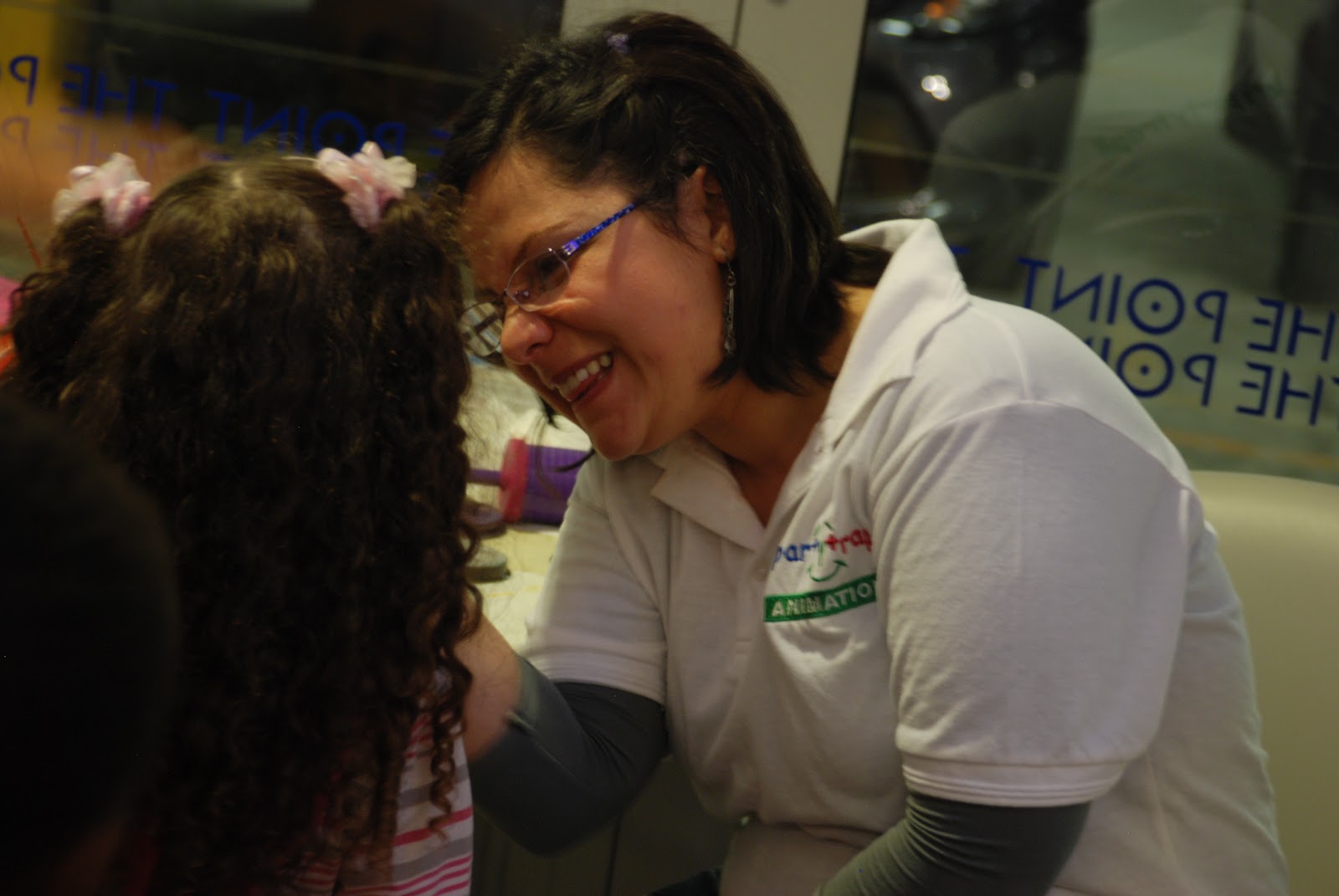
Longest Standing Partytrap Animator - Steph A!


'Amazing', 'sweet' & "calm" are among the words our animators use to describe Steph (or as we call her Steph A). She has been in the team ever since Partytrap was conceived and this of course makes her the most experienced of us all.  Steph stands at a different level when it comes to transferring skills onto the rest of the team, in fact she is a role model to many of us.  This, together with her great patience and care, make her an exceptional leader.

As an animator Steph is one of the most versatile and gentle.  She can calmly handle any situation and age group with her poised and friendly character and this is why children feel at ease around her.

She has given a lot to Partytrap and we are all very grateful to be still enjoying her work, knowledge and friendship. We dedicate this blog post to her to share some captured memories of her within the team! Enjoy!


Monday, 26 May 2014

Children and Physical Play

Physical play includes activities that use physical movements to allow children to use their energy, giving children the chance to develop gross and fine motor skills, learn new things and socialize. Physical play also benefits a child’s health and understanding the importance of physical play is vital to your child’s development.


Ideal physical play incorporates play with social interactions and problem solving. Physical play provides various health benefits. It promotes early brain development and learning in infants and young children and decreases the risk of developing health conditions like coronary heart disease, high blood pressure, diabetes mellitus, obesity and many other chronic health conditions.

Most children naturally develop the ability to run and walk. However, they require practice and instruction to develop hopping, galloping, sliding, catching, jumping, throwing, kicking, bouncing and striking skills. Children incorporate these skills into sports, games and dance. 


Playgrounds are perfect places for a child to develop mental connections, socialize and develop fine and gross motor skills mentioned before.

Although those who are parents now may have spent spent most of their childhood riding their bikes and playing games like baseball or football on side streets, many children today spend much of their time indoors, playing games on their tablets or watching television. Research has found that unstructured outdoor play is critical to the health of children. However, many have experienced a marked decline in the time they spend in free play.


Parytrap's Summer Club holds strong to the importance of physical play. It not only offers structured outdoor games but also opportunities for the children to explore and have fun in the sunshine of the great outdoors.


Written by Margaret Said, Partytrap Summer Club Coordinator


Wednesday, 19 February 2014

Temper tantrum crises!


Nowadays, perhaps more than before, many parents find themselves worrying trying to differentiate between what is considered to be 'normal' levels of 'naughtiness' and when their child's behaviour could be a sign of a behavioural or emotional problem. A few weeks ago I was asked to answer a few questions by Ramona Depares regarding behavioural disorders,when parents should start to worry, what are the symptoms and how they may access help and support.

As a parent, especially a new parent, one might find it difficult to know when to look for professional help or when there should be a cause for concern. A few years ago children who had many behavioural, social and emotional difficulties were not given the attention they needed because their behaviour was struck of as being 'naughty', 'lazy' or 'an attention seeker'. Today there is more information on the matter and many parents and teachers are recognising symptoms early which is helping children get the treatment they need. However I worry at times, that ordinary naughtiness might be misconstrued by worried as parents as symptoms of ADHD. I often hear people saying " Il-hin kollu joqmos dat-tifel, dak zgur ADHD" (that boy is always fidgeting, he's ADHD for sure". Sometimes it is important to realise that certain behaviours are a normal part of growing up, especially while the child is trying to form his or her identity in this world.

The feature also looks at possible reasons as to why some children engage in chronic lying and how parents might be able to handle this. If you have any experiences you would like to share please leave a comment below.

Below please find the featured interview by Ramona Depares that was published in the parenting section of the Sunday Times last weekend.

Press link to view full feature "On their worst behaviour"

Written by

Dr. Stephanie Bartolo
HCPC registered counselling psychologist (U.K)
Psychologist (under supervision) (Malta)


Thursday, 13 February 2014

We're getting older, but we're not teenagers yet!

Last Saturday I popped by at a party to check if everything was going according to plan! Just a few minutes after I arrived, I bumped into another well known client of ours. The conversation that followed made me realise how fast time flies by!

This client's daughter is now 12 years old, and yet I remember clearly her party when she turned 5! At that instant I felt a mixture of feelings... 'older' was one description that fitted quite well, although I prefer picturing myself as 'more mature'. 'Satisfied' and 'fulfilled' were some other words which sprang to mind. 


themed party at Palazzo Parisio, Naxxar

However, it mostly made me feel proud of our team's efforts. It's great to look back and remember the hundreds upon hundreds of children and the way we helped put a smile on their faces, on their special day. My appreciation goes to each and every animator and service provider who has pitched in throughout the years, and to our loyal clients, who push us to deliver even better services over the years.

We are now very much looking forward to November 2015 where we shall celebrate our own 10th birthday party!! 

...let's partytrap!!  

Wednesday, 11 September 2013

Healthy Twists to Halloween Treats!


Themed parties at Partytrap Animation are becoming more and more popular and Halloween has always been the most successful one of all! Following these hot summer months it will be the next exciting festivity that we would be gearing up for!
Trick or treating is one of the main activities that is connected to Halloween and we all know how it goes... kids end up with bags of sweets and goodies even without knocking door to door!  Activities during parties and other Halloween related events are mostly about distributing as much candy to kids as possible.  This is bad news for the young bodies who either suffer crazy sugar rushes or just add onto teeth and obesity problems in kids.
Click on the link below to get some ideas on how to tackle the sugary monsters while keeping up with eerie witches and  creepy pumpkins during Halloween!

Partytrap is an animation company offering entertainment services for different kinds of events including birthday parties, seasonal parties, school events, marketing events and kids’ areas.  For Halloween we have the Spooky Partytap Package!
The package includes specially themed games, dancing, music, interactive activities, face painting and balloon modeling. These parties cater for medium sized group of up to 25 children led by three animators each with their own outfits to compliment the atmosphere. This special package is offered at €180 for a two hour duration.
Additional items can add extra effect to your next Halloween party this year!
Fortune stand (includes an additional animator, costume,
structure, glass bowl and creepy pumpkin!)
Magician (30-40 mins)
Light Costumes (pirate, witch,)
Carved pumpkins for decoration


Friday, 16 August 2013

Special & Formal Events Section


Child-friendly events: A Cute Occasion or Messy Ordeal?


Wedding, corporate or other special event?  Worried about the guests bringing children to your special occasion?  This is a common yet delicate issue because you do not want to offend anybody if you do not wish to have little guests but at the same time your goal is for the guests enjoy themselves should you decide on a child-friendly event.


First things first.  Before sending out any invitation, decide whether the celebration will be an adults-only zone or not.  Make it clear to the guests so that parent guests can make their own arrangements for the occasion.


Deciding pro children attending your event with pretty formal dresses and tiny penguin suits might make them look adorable and angelic at times but it certainly does not mean that you do not have to think about their own entertainment too.  Children at special events need to be occupied and kept busy otherwise they will just get bored and irritate their parents or even worse other guests!


There are many options on how to tackle this.  You as a host or organizer can provide an area or table especially dedicated to them. Colouring books, crafts supplies, puzzles, play dough, quiet board games and movies are all ways of keeping them busy.  Having some of the guests keep an eye on them would be even more helpful.

Another option would be to provide professional entertainment especially for the children.  This is a sure way of having your mind at rest, where the children will definitely enjoy themselves and not interfere with the rest of the party.  Event sitting is becoming a more popular choice for formal events as it is a form of child animation which maintains the decorum of the formal event.


At Partytrap our event sitting services are one of a kind. Our team of animators is dedicated and experienced to handle different age groups with the appropriate activities. We include interactive games and crafts and fun activities that children will enjoy and that parents will appreciate!  Contact us on info@partytrap.com for more information.


Thursday, 18 July 2013

Parties with a splash!


You can still enjoy a relaxing day by the pool during your children’s parties!  Here are a couple of links with some great pool party ideas... enjoy!


Partytrap's Splash Parties offer the best solution for a refreshing and fun time for the kids during the hot summer months!  Our animators make sure that the children have a splashing time with plenty of water games, interactive activities, dancing and music!  

The standard package lasts for 2 hours and has a minimum of two animators leading the party. Games and activities are carefully chosen beforehand to suit the ages of the kids invited.

Venues for Splash Parties include private pools in homes, hotel pool areas and of course, our lovely beaches!

Please contact us on info@partytrap.biz to book your next unforgettable party!


Wednesday, 15 May 2013

Thanks Xer!


Dear Partytrap Fans!


We need to say bye to one of our greatest animators.
Xer has been with us since the beginning and participated in numerous events and parties. She did an excellent job in the last 6 years at Partytrap and she will be missed a lot.
Xer, as a talented dancer has contributed to most of the choreographies performed by our animators and with a great sense of humour, she has put a smile on the faces of many kids.
We could count on her anytime and she always made sure that each and every child had a wonderful time. With a great passion for entertainment she caused thousands of amazing moments and gave memorable experiences to hundreds of children.
We really appreciate her initiatives in voluntary events such as the one at Mater Dei in the Rainbow Ward as well as our participation in the Puttinu Cares Marathon. We are glad that she will continue contributing to these voluntary events.

Xer it was great to work with you and we wish you the best of luck in the future.


Sunday, 26 August 2012

Fighting low self-esteem, the young person's disease!


        Unfortunately it seems that low self-esteem has become, or rather is still a world wide epidemic. The number of children I have worked with that say things or behave in ways that show me they have low self-esteem is remarkable as well as sad. Research shows that girls seem to reach a peak in their self-esteem by age 9, and then there is a tendency for it to slowly start decreasing as they become more aware of the media and give more importance to peer pressure. In boys, this change happens earlier. 

Writing about examples of children with low self-esteem would be beyond the scope of this article however I wanted to share some activities we have employed over the years in my practice both as an animator as well as during my training as a counselling psychologist with children.

1. Feeling cards
These are cards that can be bought from shops either locally or online which depict both children and adults with different emotions. This can be used as a game or activity in which you would invite your child to guess the feeling on the card you have picked and you do the same with him/her. Once the child has gotten used to the emotions I like to invite that person to invent a story of why he/she thinks the person is feeling what they are feeling.

These cards allow children to associate themselves with different feelings because they can identify themselves when you ask ' Have you ever felt like this little boy is feeling in the card?'. By asking such gentle probing questions you not only give the message that feeling any emotion is normal and good; but you also create a stronger bond and show them that they are not alone in feeling what they are feeling. With children who tend to think of themselves negatively, sometimes asking the child 'what do you think would make this little boy feel better?' gets the child to think outside the box of their own needs and what they can do to help themselves.

It is very important that we raise our children to be resilient and learn how to cope with life's stressors. Sometimes we try so hard to protect our children from harm's way that we can forget to teach them how to protect themselves :)

2. Discover hidden talents
One of the most common phrases I hear when working with children in any role is "I can't do it, it's too hard...I'm not good at anything!". What happens here is called generalising. This happens when something is difficult and they are not able to do it so they generalise this to everything. Therefore if I cannot hit a tennis ball with the racket, then I cannot do anything sports related. The trick with this is to actually explain and tell the child that it is true that they are having difficulty with one task, but that does not mean that they are going to have the same difficulty with anything else. Following this you can grab a piece of paper and ask the child what they are good at doing, and what they have found difficult. They might need some encouragement. Often they might start out by saying "I don't have anything I am good at", this is your chance to be 'curious' together and go over things you have done together until they come up with at least one good thing.

3. Set realistic goals
When setting goals with children it is important that the goals are realistic. Sometimes children use black or white thinking, that is, something is either all good or all bad. We have to help them make goals that are easily achieved with enough of a challenge that is stimulating but not overwhelming enough to make them want to give up. I have found with children as well as with myself that when we are faced with large tasks, breaking it down into small easily attainable goals makes the difference between coming out of it feeling like a star or giving up after 5 minutes.

4. Use fairy tales wisely
Children love fairy tales, story books and films. If one had to stop and look into the hidden meaning, nearly all of the beloved characters had issues somehow relating to self-esteem. Some of the example include : Ariel wanting to be human , Shrek being upset that he is an Ogre, the Beast in Beauty and the Beast, Piglet in Winne the Pooh...the list is endless. It's what we can take from these stories that can have a massive impact on our children. 


Self-esteem is such a common word used for both children and adults that one can easily fall into the trap of dismissing it. Despite being one of the most common issues, it is not easy to work with once people reach adulthood. Targeting self-esteem early on is so important and it need not be overwhelming. The actual process, if you take it with a pinch of salt and optimism, can actually be fun!


Written by
Dr. Stephanie Bartolo 
HCPC reigstered counselling psychologist (U.K)

Wednesday, 11 April 2012

Finger Friends!


Here's a great idea
for you to try at home from 
http://www.favecrafts.com 
We're giving it a shot to make one 

resemble our own Trappy!!


Sunday, 1 April 2012

Great weekend at The Point, Sliema

It's another busy weekend at Partytrap as we're approaching Easter '12.

Here are some photos from the 2nd birthday party of Malta's largest shopping mall - The Point in Sliema. We have been engaged once again to take care of the children entertainment on Saturday 31st March and 1st April!


photos by Christian Borg

Saturday, 21 January 2012

Disastrous dinners?


Ever had that dinner in which everything seems to go wrong? Food thrown on the floor, refusal to eat, tantrums and so on? I thinks this is something most parents have come to grips with at some point in their lives, and most agree, even though we cherish and look back on many past memories - dinner time is usually not one of them!

Child eating patterns can be of a great concern for parents and is one of the leading issues presenting in pediatric care, according to Faye Powell. Recent research has shown that " friendly interaction between mother and child instead of coercive strategies, like pressure and physical prompting, may encourage young children to try different foods.".

Having your child try new food and being greeted by tantrums and refusal to eat can test anyone's patience, however responding with aggressiveness will only help your child associate that food as something that is 'bad' and that is why there is so much pressure to eat it.

Some ideas that might help encourage your child to eat :

  1. Let your child explore and experiment with the food
  2. Modelling - try eating the food yourself first and emphasis how good it tastes, this will then make them curious and might help them want to try the food themselves.
  3. Introduce the new food in a fun and creative way ex : yummy green trees (broccoli), crunchy carrots , juicy tomatoes ect.
  4. Be patient! Children will test your patience and your boundaries, keep firm but also remember that as an adult there are foods that you yourself don't like and it's not the end of the world if your children don't like it either.
For more information on the study quoted above please click on this link!

Dr. Stephanie Bartolo
HCPC registered counselling psychologist (U.K)
Psychologist (under supervision) (Malta)


Monday, 26 December 2011

HoHoHo Merry Xmas!

HoHoHo Merry Xmas to all!

Another year has come and gone, but not before filling our stomachs full of good food, stockings full of sweets and wrapping paper full of presents. We all love xmas, especially at Partytrap. Every year we get to entertain hundreds of children in different venues and have so much fun. However one of the most rewarding experiences is the annual Christmas party we take part in at the Wonderland Ward at Mater Dei.

Steffi & Dr. Silly Lilly
Our dj Stef C
We have now gone into our 4th year taking part along with other talented local artists. While getting the chance to speak to some of the children who are unable to join the party....it really drives home the xmas message. While people are at home hoping to get an xbox, an ipad or anything really, the letter to santa that these children write is a simple one ' I hope to get better and go home to play with my sister'. I for one, and I think I can speak for most of us here, was so touched, and always go home re-evaluating the meaning of Christmas and respecting the beauty and depth of a child's mind.

I would also like to take this time to show my appreciation to Claire Grech one of the nurses in the pediatric wards at Mater Dei who is so dedicated and who strives to make this party a special one for each and every child.
Claire Grech - one of the most dedicated workers I know


I won't blabber on much more, but from all of us at Partytrap we wish you a very merry Christmas and a fantastic new year!


The partytrap elves


Saturday, 29 October 2011

Dealing with children's seperation anxiety

Whether you are a parent, aunt, granny, granpa, teacher, carer or child, I'm sure we have all experienced or at least witnessed the heart-breaking scene of a child throwing a tantrum and refusing to leave his/her parent's side when being dropped off at school. It's also good to say that as well as being emotional, this scene can also get very tiring when it happens on a daily basis.

Seperation anxiety usually begins in infants between 4-6 months, then re-emerges at 18 months after the child has learnt to differentiate between the mother/father and other care-givers. As oppo
sed to adults, young children do not have the capacity to understand that when you leave, you will be back. If young children have not developed what Piaget calls object constancy, there is a great chance that he/she believes you have disappeared forever. No wonder that poor little kid latches on so hard! There are a few ways in which you as a care-giver can help the child ease into this and reduce the anxiety

Peak-a-boo
Despite being a fun game, peak-a-boo serves a much deeper purpose. Playing peak-a-boo with your child allows you to develop a strong relationship in which the child experiences a few seconds of anxiety at the thought of losing you, but is relieved quickly when you show your face again. This eventually sends the message that even though you have disappeared, you do eventually come back.


Explain your day and why you are leaving

With most children, especially those over 3, it has found to be helpful if you explain why you are leaving and what most of your day involves for example explaining that you are going into your office, and then will write some things on paper ect. This helps the child to get a concre
te idea of what you are doing. It is also vital to give the child a rough estimate as to what time you will pick him/her up. This gives them a goal to focus on.

Transitional objects


These are objects that the child picks as a form of 'security' such as blankets, dolls, pieces of your clothing, soft toys ect. This is their way of keeping a part of you with them and helps ease the transition of you not being there. Don't be too quick to remove these objects as it does help them to cope.


In summary, always remember that such tantrums all stem from anxiety and fear that you will abandon the child. The easiest thing is to reassure them that this is not the cas
e, and that you will be back, even if you are leaving for a little while. Also, it helps to know that despite maybe feeling irritated by the tantrums, they ultimately occur because the child finds it unbearable to think of a world without you. So amidst all the frustration, there is a silver lining :)


Sunday, 2 October 2011

Trick or treat?


Halloween has fallen upon us again. The time when children state that what they most look forward to is the sweets. I in fact have noticed over the years, that the bit they most enjoy out of Halloween is the thrill they get out of being slightly scared that at least one mythical story might be true, despite never admitting it :)

This year, why not try something different? We've come up with a package that will not only promise to keep your children entertained, but truly offers the Halloween experience.


Tuesday, 13 September 2011

All good things come to an end...


It is now the 13th of September, a new week, and yet one that is totally different. For a start for the past ten days my morning did not begin with hearing the voices of the kids saying "bongu" or "good morning, look what I've got today". I miss those days and would trade anything to have another week at the Summer Club.


I can only comment up to the date of performance week, since that was my last day before leaving, however what a journey it has been. It is safe to say that all the lessons, workshops, games, trials of patience and encouragement paid off. The children had a fantastic time, nearly as much as we did. Dress rehearsals are often misleading, many things crop up last minute, last minute fears, problems with hair and make-up and blanking out. Nearly most of these things dissipated on the day and the kids really shined, and I think I speak for everyone who worked at the Summer Club this year, that I've never been more proud of a group of young children.


I thoroughly hope you, but most especially the children have enjoyed their 8 weeks at the Summer Club, it has been an experience for all of us and will always cherish the special moments, the times when a child says something that is so unexpected and funny, he/she actually renders you speechless for a few seconds. These are the moments I will take with me.


Wednesday, 17 August 2011

Boost creativity and confidence in children


The fantasy land of a child is simple, and still remains the same despite living in the era of PlayStation's, Nintendo and electronics - fun, mess, time and love. Nowadays many of us find ourselves feeling the pressure that being a parent can bring, to give the best to your child, to bring him/her up in the right way, to send them to the appropriate activities, have discipline but not too much. In reality - who can keep up with these unrealistic expectations? Nothing short of a superhero, and I'm sure it would still have flaws.

The key to bringing up a creative, confident and most importantly, a happy child, is to go back to your roots - remember what it was like when you were 3 and what was fun. Ultimate fun and freedom does come with a mess unfortunately, so be sure to cater for that in a controlled environment. Here are 5 tips for the week that help boost the confidence and creativity that help in moulding a happy child and adult :


1- Work from the theory of different types of intelligences.
Sternberg believed that children have different types of intelligences, creative intelligence is gained by encouraging children to question their experiences and what is taken for granted to try and look at alternate links and possibilities.

2- Encourage playing using different mediums that simulate all 3 types of learning
Everyone has a different learning style ; some are visual learners meaning they learn best through colours, flashcards, and visually stimulating material. Auditory learners on the other hand work best with things such as music, songs, rhymes ect. Kineasthetic learners learn 'by doing' and experiencing the things they need to learn by touch. Encouraging play on all 3 levels will help your child develop abilities in all 3 areas and help find his or her strength.

3 - Children will make a mess - let them!
True creativity requires lots of time, dedication and room and freedom to make a mess. As long as the appropriate rules are put in place before play, you should not find difficulty. Usually many children will abide by the rules as long as you clearly state them and the consequences should they be broken.

4 - Praise, praise and praise again!
Even if it's just a master piece of a big blob of black paint, that piece of paper is your child's creation. This is also an opportunity to get to know your child, how he/she is feeling and a small part of their personality: be inquisitive, ask about the colours, the characters, who they are and why they were chosen. You'll be surprised how much you can learn about your child just from a simple drawing or scribble.

5 - Teach the art of imperfection
Often when we only praise someone on their successes, it can send the message to both children and adults that they are entitled to love and praise only when they succeed. This is where the tantrums start; when a child loses a game or does a drawing that appears to be 'not as good'. Children have a very strong need of approval from adults and can often feel like they are letting us down. Loosing in games and rejection are things children need to learn how to deal with effectively from an early age and this can be done by simple reactions towards their play, drawings and games. Children test us all the time, its one of their charms :)


Children are basically simple. In today's world there are a lot of pressures to do this and that, but in reality all children truly need are their basic needs to be met; love, time and faith :)

Saturday, 13 August 2011

Princesses, gardens, forests and... now it's time for a break!

Buskett Eco Tour for Partytrap Summer Club kids
This Summer was that bit more hectic for Partytrap following the launch of Partytrap Summer Club. Last week we organised the first ever Eco Tour for the little ones with the professional help of Merill Eco Tours. A group of around 25 kids enjoyed an unusual half day in the limits of Buskett, where we eluded the soaring August temperature thanks to the shady trees. The kids spent most of the time participating in fun games related to the surrounding environment.


Preparing for the 'Ball' - Face Painting

This month was also very popular for Princess Themed parties. Our latest appearance was fittingly at Palazzo Parisio & Gardens in Naxxar; where tiny princesses running around in a real palace made the experience that little bit more enchanting!


Tatiana - our own Belle

More to come... after the holidays!!

Enjoy